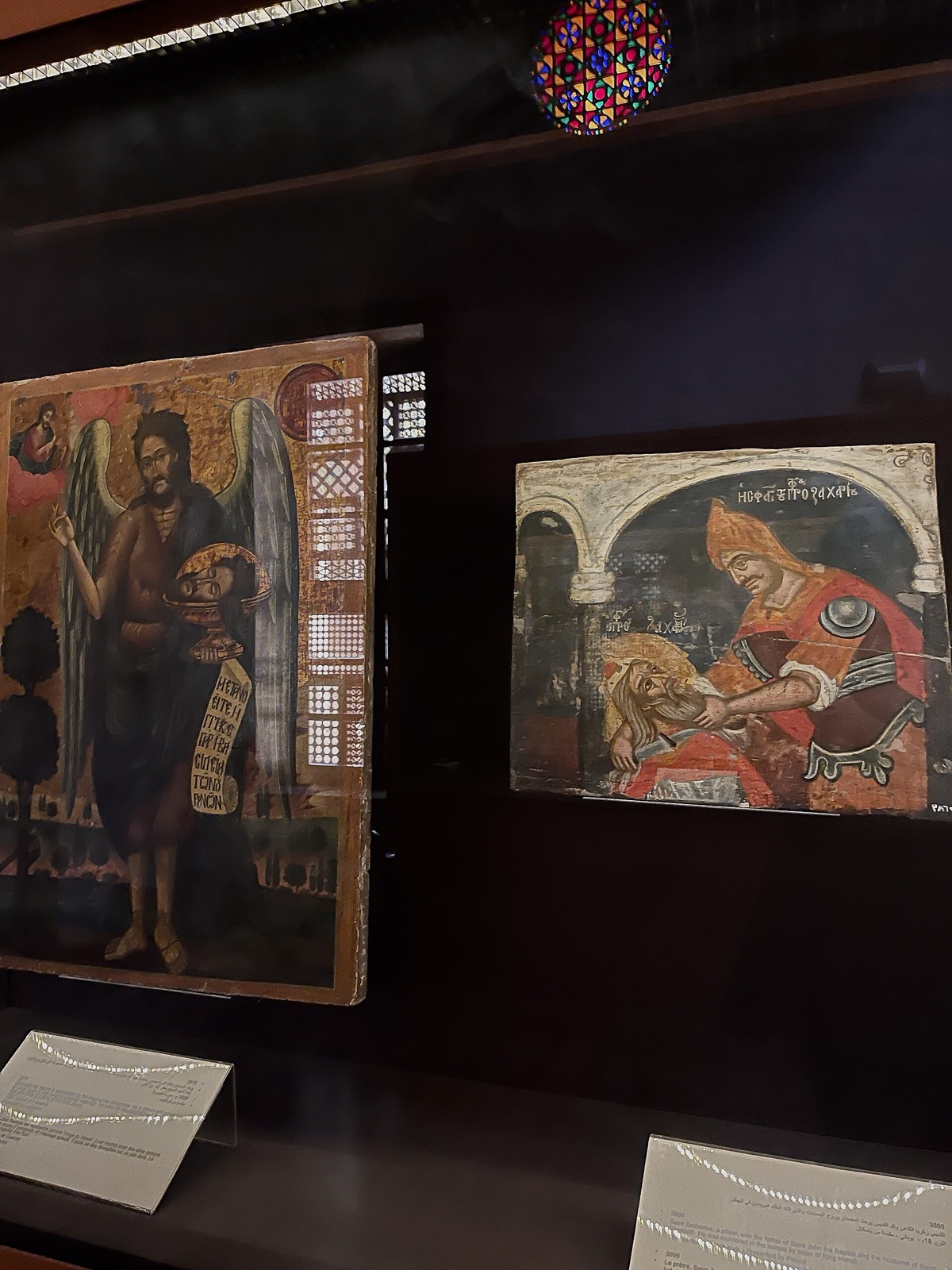
The Coptic Museum and Museum of Islamic Art do more than add later chapters to an ancient-Egypt itinerary. They change the route from dynasties and royal names toward manuscripts, faith, craft, architecture and networks of exchange.
Use material as the first coordinate
At the Coptic Museum, textiles, manuscripts, icons, carved wood and architectural fragments can be compared across changing settings. At the Museum of Islamic Art, metal, glass, ceramic, wood, textile and manuscript support routes across regions and periods. Choose two media rather than trying to complete every case.
Read categories without freezing history
“Coptic” and “Islamic” are useful institutional headings, not single unchanging styles or communities. Check dates, places, languages and functions. Look for continuity inside each category and connections across it. A devotional image, domestic textile and building fragment should not be forced into the same story because they share a room.
Let script occupy physical space
Writing on a manuscript, vessel, textile or architectural surface guides movement differently. Observe direction, margin, scale, color and relationship to ornament. Even without translation, you can see who needed to approach closely and which text acted at architectural distance. Bindings and page openings reveal that a displayed manuscript is one moment in a sequence.
Map Cairo's wider networks
Objects connect Egypt with Africa, the Mediterranean, the Middle East and Asia. Avoid assigning every technique to a timeless national style. Ask whether material and form were produced locally, imported, adapted or repaired. Networks appear through comparison of process, not only motifs.
Use Old Cairo as lived context
The district around the Coptic Museum extends questions about architecture and religious practice, but churches are active community spaces, not museum annexes. Choose one nearby place and respect worship, access and dress. This creates context without turning proximity into permission to rush every monument.
Allow conservation to shape the route
Textile, paper, parchment, wood and paint are sensitive to light and stress. Rotation and low illumination are forms of care. Do not build a visit around one fragile object seen in an old catalogue. A material family gives the route enough flexibility to survive changing display.
Keep geography realistic
The two museums belong to different Cairo routes and each deserves concentrated time. Pair the Coptic Museum with one Old Cairo site. Give the Museum of Islamic Art its own central-city plan. Confirm current access and operational details through official sources.
Compare architecture and portable object
A carved panel, capital, door or window screen once organized movement through a building. Museum mounting can make its surface readable while removing that function. Look for scale, edge and attachment points, then connect one portable object with one architectural fragment. The comparison keeps ornament tied to space, use and skilled construction.
Notice who receives an individual name
Labels may identify a patron, ruler, scribe, saint, workshop or modern collector while makers and users remain unnamed. Record which roles become visible and which are described collectively. This does not invalidate the label; it shows how documentation survives unevenly and which kinds of evidence each collection can recover.
Sources reviewed 28 July 2026: Coptic Museum ↗ · Museum of Islamic Art ↗. Displays and visitor conditions may change.