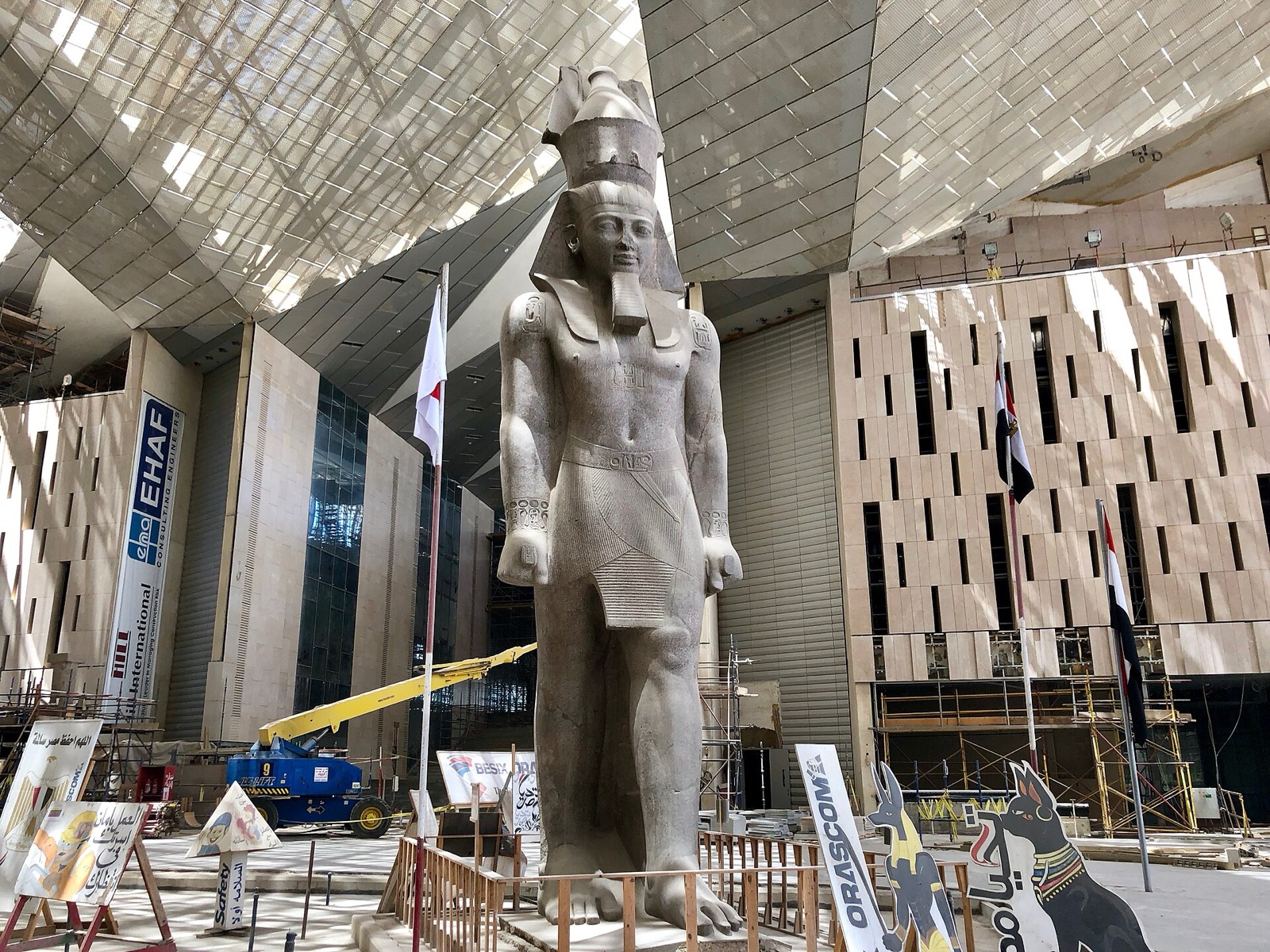
Royal images often dominate the first sightline, but a gallery of kingship is not merely a sequence of rulers. Pose, scale, material, repetition and neighboring objects show how authority was made visible and maintained.
Identify the gallery's version of power
Does the room emphasize chronology, monumental scale, a single reign or a temple context? A colossal statue at an entrance creates a different argument from several small royal figures compared inside cases. Read the title and labels for verbs: ruling, offering, protecting, building and commemorating are distinct forms of royal action.
Compare bodies before names
Choose two royal figures and describe posture, hand position, support, gaze and crown. A striding body may still remain controlled and frontal; a kneeling ruler can perform service to a deity without becoming an ordinary subordinate. Compare idealization without assuming every face is either a literal portrait or a meaningless convention. Images could combine recognition with a role defined by ritual and workshop tradition.
Let scale organize relationships
Large size is not simply a synonym for importance. It controls approach and the viewer's body. In relief, hierarchy appears through relative scale between ruler, deity and other people. In freestanding sculpture, reconstruct the absent doorway, court or processional route. The museum's open floor may allow circling an image that ancient viewers met frontally.
Read material as institutional evidence
Stone transport, metal supply and specialized carving required organized labor. Polish, pigment and inlay changed how surfaces met light. Avoid reducing every difficult material to wealth. Ask which properties—durability, brilliance, rarity, color or regional source—served the image and its original setting.
Put officials, gods and makers back into the room
Royal authority depended on relationships even when the king stands alone. Neighboring divine figures can show ritual legitimacy; officials reveal administration and access to institutions; tools and architectural fragments can restore labor and building. Notice whether the gallery includes these systems or concentrates authority into individual royal bodies.
Treat repetition as a political language
Repeated poses and titles made kingship recognizable across generations. Variation in face, proportion, dress or material could respond to new circumstances while preserving continuity. Compare three similar objects rather than seeking the single best example. Ask which element remains stable and which change the museum wants you to notice.
Separate damage from explanation
Broken noses, recut names and reused blocks can result from different events. Do not assign a political motive without evidence. Look for label distinctions between ancient alteration, later reuse, excavation damage and modern restoration. The uncertainty is part of the object's political history.
Ask who could see this version of kingship
An image in a restricted temple zone, open court, tomb or portable setting did not address the same audience. The museum removes many ancient access boundaries and places rulers from different sites side by side. Use provenance to reconstruct who could approach, at what distance and during which activity. Authority depends not only on what an image shows but on where and for whom it became visible.
Notice the modern royal route
Museums often use royal sculpture to create landmarks and circulation. A colossal figure can orient a visitor as effectively as a sign. Ask whether the building turns kingship into the main path through history and where non-royal evidence enters that path. The question concerns curatorial emphasis, not whether royal objects deserve attention.
Sources reviewed 28 July 2026: GEM collection ↗ · Egyptian Museum ↗. Displays and visitor conditions may change.