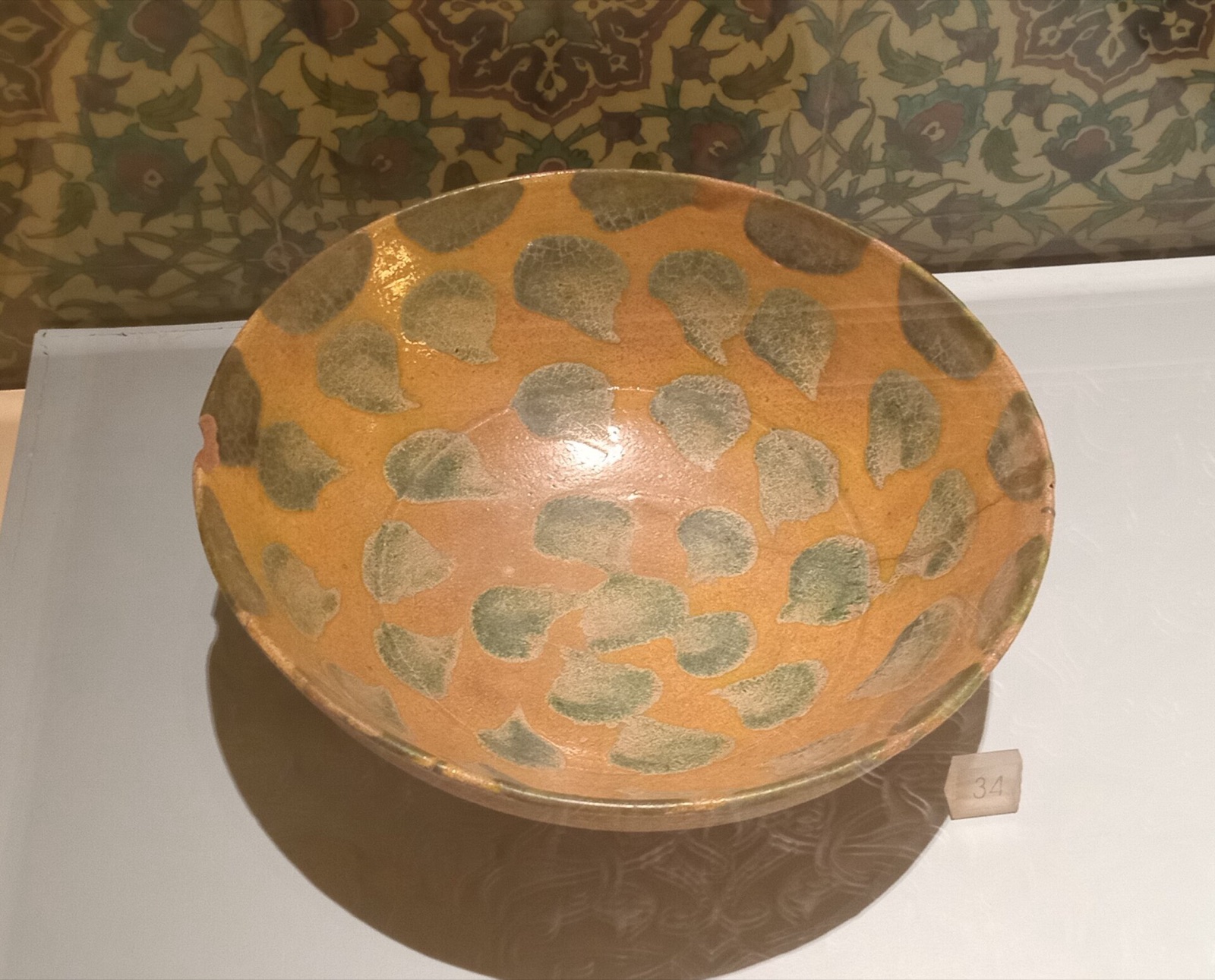
Objects connected with food, clothing, tools, work and domestic space can look visually modest beside royal sculpture. They are not background. They reveal repeated practices and social systems that monumental collections often compress.
Start with action rather than object name
Ask what had to happen around a vessel, spindle, tool, sandal or piece of furniture. Was it carried, filled, repaired, worn, stored or deposited? Function is not always certain, but wear, residue, form and archaeological context can narrow the possibilities. A label naming the object is the beginning of interpretation, not the end.
Keep archaeological groups together
An isolated bowl tells a different story when it belongs to a burial, household or workshop assemblage. Read labels for findspot and group numbers. Modern cases may separate materials that were discovered together; conversely, similar objects may be grouped typologically despite coming from distant sites. Distinguish ancient association from the museum's comparative arrangement.
Recover skilled repetition
Daily use does not mean unskilled production. Regular weaving, ceramic forming, woodworking, food preparation and tool maintenance require practiced knowledge. Look for even edges, joins, abrasion, sharpening and repair. Small variations can show hand production without turning every irregularity into an individual signature.
Question what survives
Stone and fired ceramic endure differently from basketry, food, leather and wood. Museum collections therefore overrepresent some materials and practices. Scarcity of surviving organic evidence does not prove scarcity in ancient life. Display rotation also protects light-sensitive textiles and manuscripts, so absence can be a conservation condition.
Connect households with institutions
The boundary between daily and official life is not absolute. Workshops can serve temples or courts; administrative writing organizes rations and labor; household objects can enter burials. Ask whether a gallery category makes these relationships visible or divides them for clarity. The useful question is how practice moved between domestic, economic, sacred and political settings.
Look for people without names
Many makers and users remain unidentified. Avoid turning that absence into anonymity without history. Tool traces, scale, repair and repetition can still reveal knowledge, cooperation and bodily effort. A named owner may be present on the label while the people who produced and maintained the object remain outside it.
Use NMEC and specialist collections differently
NMEC can connect repeated human activities across broad periods. The Coptic Museum and Museum of Islamic Art allow materials, books and craft to be followed more deeply through later histories. No institution contains a complete everyday Egypt; compare their organizing questions rather than scoring their object counts.
Read quantities cautiously
A case filled with similar vessels may suggest repetition, standardization or a large excavation group, but display quantity is not direct evidence for ancient frequency. Curators select from stored collections and available space. Read labels for group context and avoid concluding that a sparse case represents a rare practice. Museum abundance and historical abundance are related only through documented collecting evidence.
Compare repair with replacement
A repaired household object suggests that material, labor or familiarity justified continued use. Another form may be cheap enough to replace. Look for drilled holes, patches, worn handles and secondary joins, then ask what kind of value they imply. Practical repair can reveal household decisions just as clearly as an inscription reveals an official title.
Sources reviewed 28 July 2026: NMEC ↗ · Museum of Islamic Art ↗ · Coptic Museum ↗. Displays and visitor conditions may change.