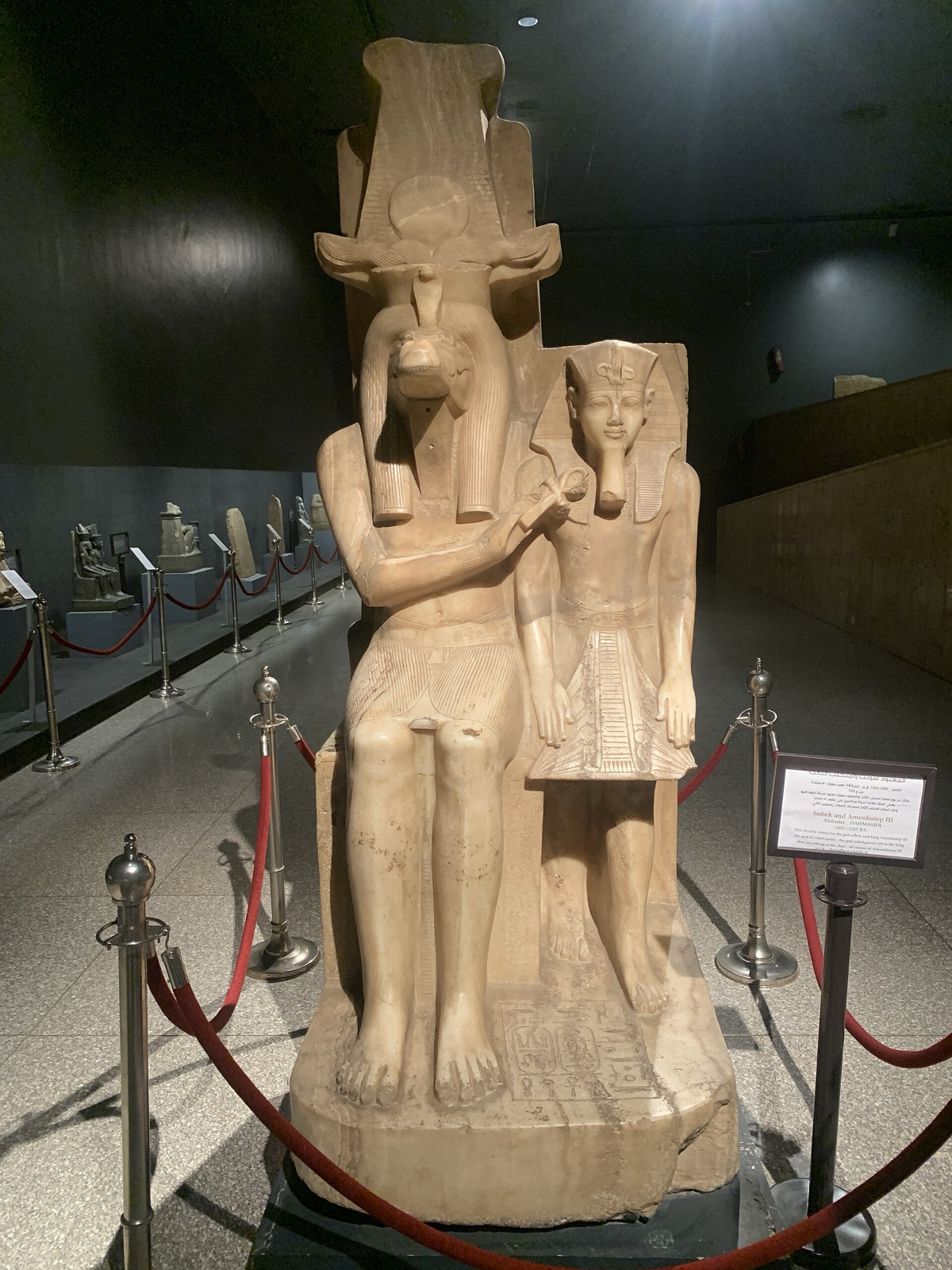
Luxor Museum can turn a landscape of temples, tombs and long transfers back into a focused set of object relationships. Its regional scale is most useful when the museum follows one major site rather than an exhausting monument marathon.
Choose the day's archaeological anchor
Visit one principal East Bank site, rest, then let the museum consolidate a question. Sculpture, architectural fragment and excavation group can clarify what weather, distance and monumental scale made difficult to see outdoors. The aim is not to illustrate every temple but to build one bridge between site and object.
Keep findspots attached
Read labels for temple, bank, cache, burial and excavation context. Objects found together can preserve relationships that disappear when each becomes a masterpiece. Conversely, similar statues displayed together may have come from different settings. Separate archaeological association from modern comparison.
Use controlled viewing distance
Indoor light and a focused mount make polish, inscription, support and restoration easier to compare. Walk around sculpture when permitted. Then reconstruct the original approach: a museum can allow views that an image inside a temple niche never offered. Display produces new knowledge while changing the encounter.
Compare divine and royal bodies
A paired statue can organize protection, legitimacy and scale through the physical relationship between figures. Look at contact, gaze, relative size and shared base before identifying the names. Ask how the composition would have operated within a temple environment and what the museum isolates for close inspection.
Restore non-royal systems
Officials, tools, burial groups and architectural evidence complicate a landscape dominated by royal building. Titles can reveal administration; material can reveal workshop organization; a fragment can preserve several phases of reuse. Choose one object that makes labor or institutional service visible beside royal imagery.
End the route calmly
A Corniche walk, meal or return to lodging can protect the visit's focus. A cross-river transfer is a separate planning decision. The available Ministry link is a collection note rather than a dedicated live visitor page, so current opening and admission conditions need an up-to-date official channel.
Carry one bearing back outside
Select one crown, offering pose, block join or inscription arrangement to notice at the next site. The museum then changes the way the landscape is read without becoming a checklist before another monument.
Read reconstruction as an argument
Reassembled blocks and restored figures make relationships visible, but they also contain modern decisions. Look for differences in material and surface that distinguish ancient from supporting elements. Read whether the reconstruction is secure, partial or hypothetical. A clear modern support can preserve uncertainty rather than pretending the object survived complete.
Protect the transition from heat to gallery
Arrival after an exposed site requires water, rest and time for the eyes to adjust. Do not begin the museum with the most demanding label sequence while the group is still recovering. Use the first room to establish a bearing, then choose the deep comparison. Physical transition is part of interpretation because it controls attention.
Sources reviewed 28 July 2026: Luxor Museum collection note ↗. Displays and visitor conditions may change.